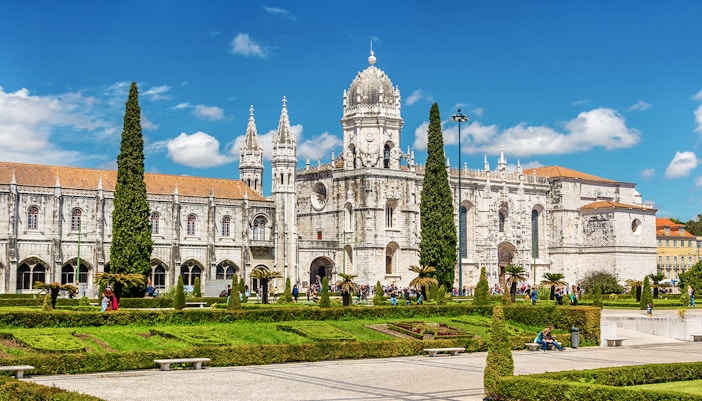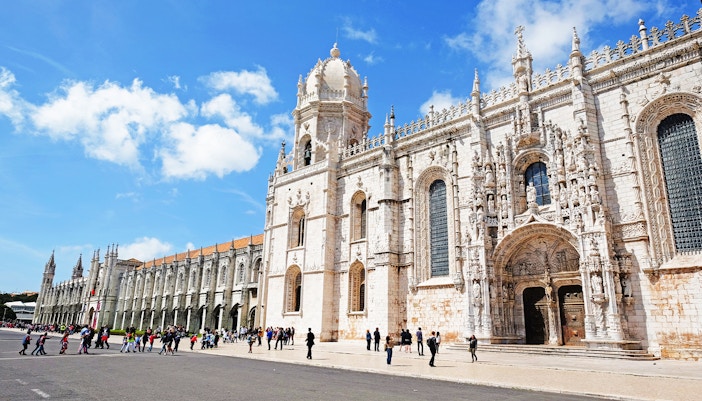

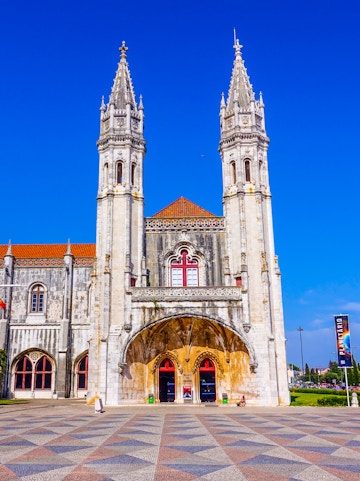
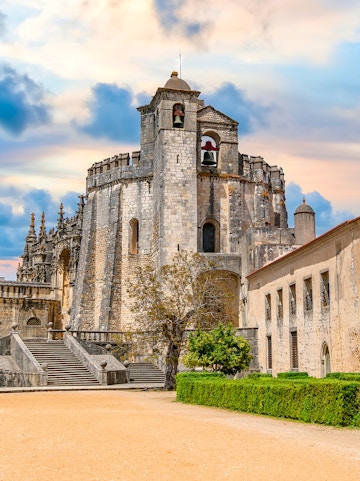
Monastery of Jerónimos

Cloisters

Included with Monastery of Jerónimos tickets

Timings

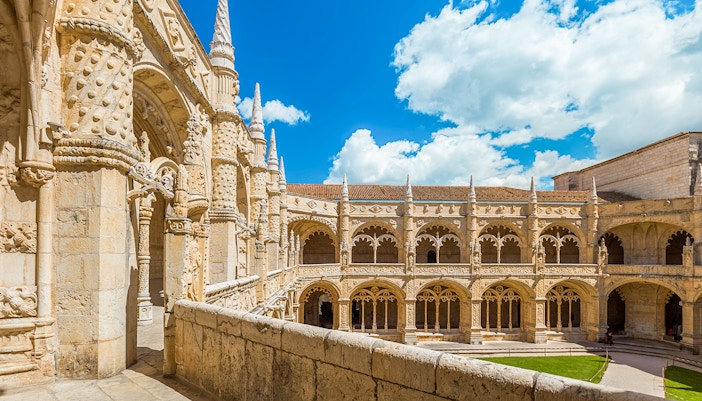
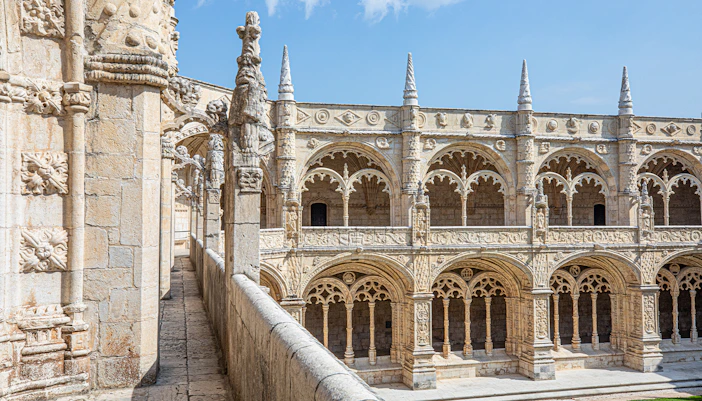
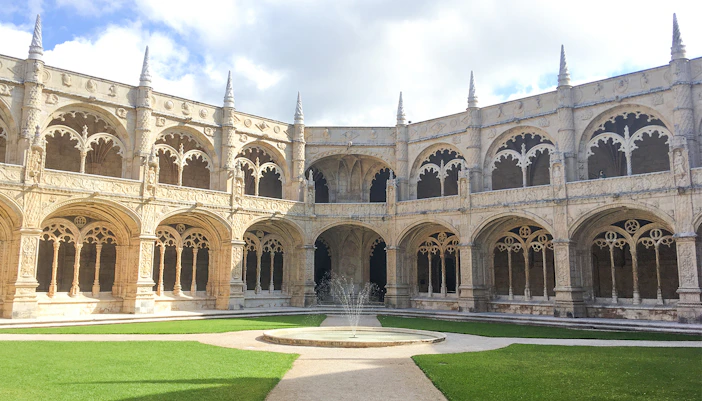
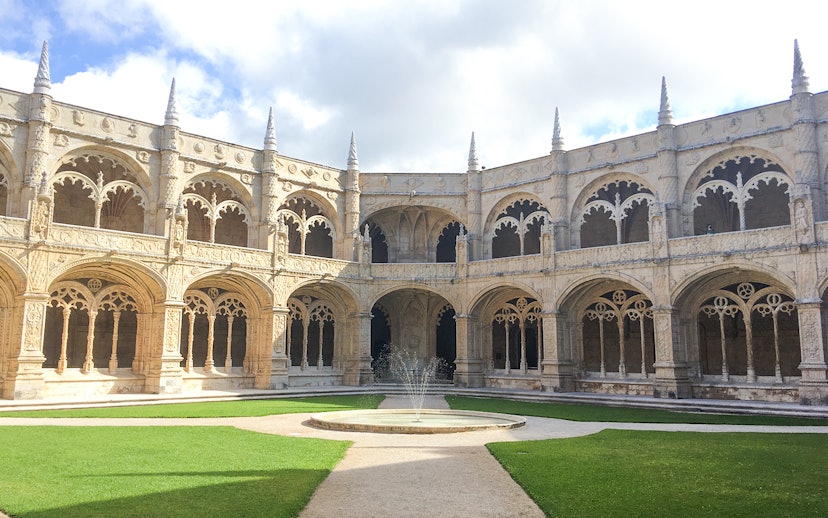
Jerónimos Monastery Cloister arcades

Top things to do in Lisbon

Quick overview
  • Access: Included in all Jerónimos Monastery tickets
  • Separate ticket: Not required
  • When you’ll see it: Main paid area, reached soon after entry
  • Visit duration: 30–45 mins self-guided/45–60 mins with guide
  • Best time: First weekday slot, ideally 9:30am–10:30am, before queues build
  • Restrictions: Photography is restricted in some areas. Modest dress is expected. Large bags and food are not allowed.

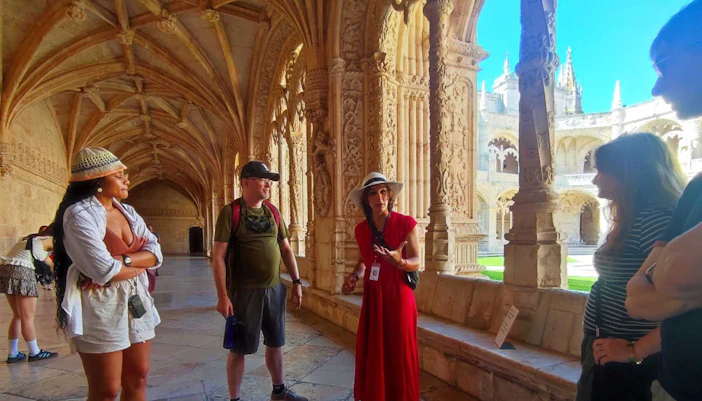
The cloister is included with all Jerónimos Monastery tickets. No separate ticket is needed. It sits at the heart of the monastery route and is the main paid space you enter after ticket check, while the church uses a separate free-entry line. Book a skip-the-line guided tour if you want to reach it earlier and have the carvings explained as you go.

How to best experience the cloister

Best time to visit
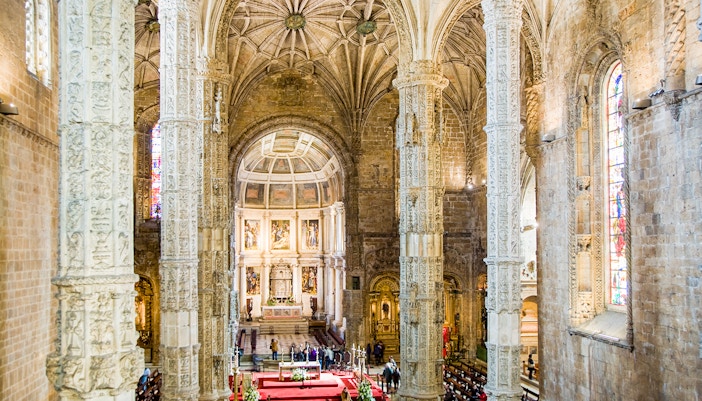
Book the first weekday slot, ideally 9:30am–10:30am. The cloister is calmest before the main entry line builds and before Sundays or public holidays draw heavier local traffic. If you arrive late morning, expect slower movement around the arcades and photo stops.

How long to spend

Give yourself 30–45 minutes if you’re self-guided, or 45–60 minutes on a guided tour. That’s enough for one full loop below, one above, and time to stop at carved capitals and long gallery views. If you rush, the cloister becomes just a courtyard.

Where it fits in your itinerary

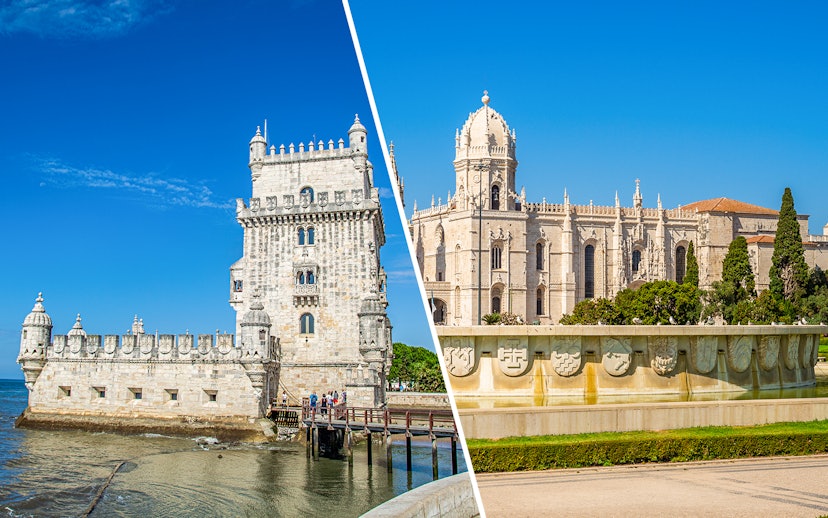
The cloister is the core paid space, so make it your first priority once you’re inside. Plan the church separately because it uses another line. If you’re pairing Belém Tower or Pastéis de Belém later, protect this 45-minute window first.

Crowd patterns

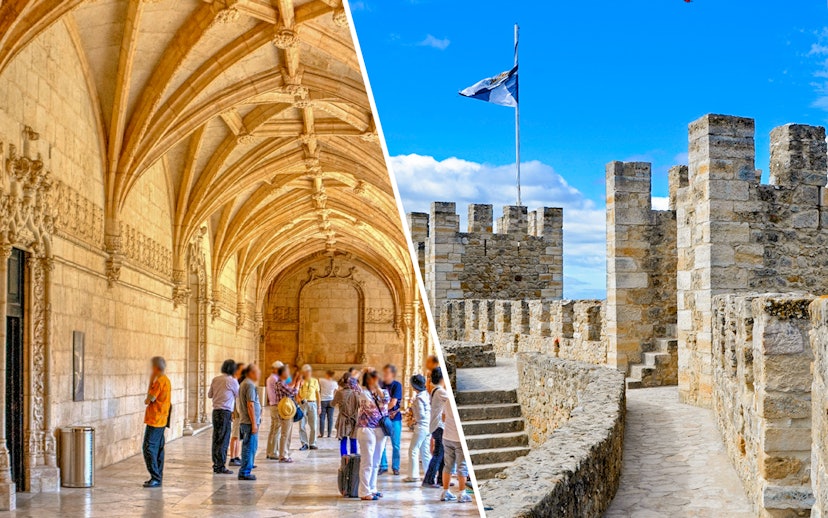
Crowds build from late morning and stay heavy through early afternoon, especially in summer, on Sundays, and on Portuguese public holidays. At busy times, the galleries turn into a stop-start loop. If you want quieter photos, avoid midday.

What to prioritize if time is short

Start on the ground floor and study the arch-to-column junctions, then go upstairs for the square-wide view across the courtyard. If you only have 15 minutes, skip lingering in the church line and use your time here instead.

Common mistakes to avoid

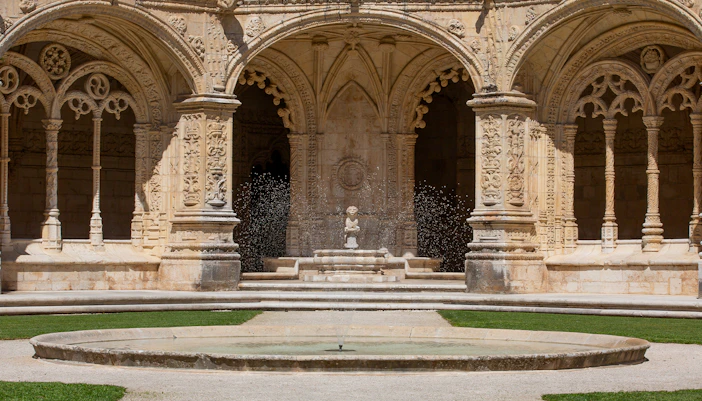
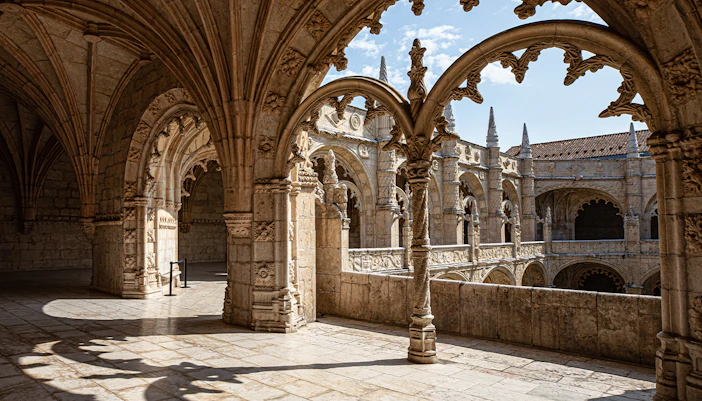
Most visitors photograph the center lawn and move on. Instead, stand close to the columns and look sideways for ropes, spheres, foliage, and sea motifs cut into the stone. Also, don’t assume church access and cloister access use the same line.

Best tickets to experience the cloister

Ticket typeWhy choose it

Standard entry

Best if you want the lowest-cost way into the cloister and don’t mind waiting or exploring without commentary.

Audio guide ticket

Best if you want context at your own pace while stopping freely around both cloister levels.

Skip-the-line guided tour

Best on busy days: faster entry, structured pacing, and expert help spotting details most visitors miss.

Why it’s worth seeing

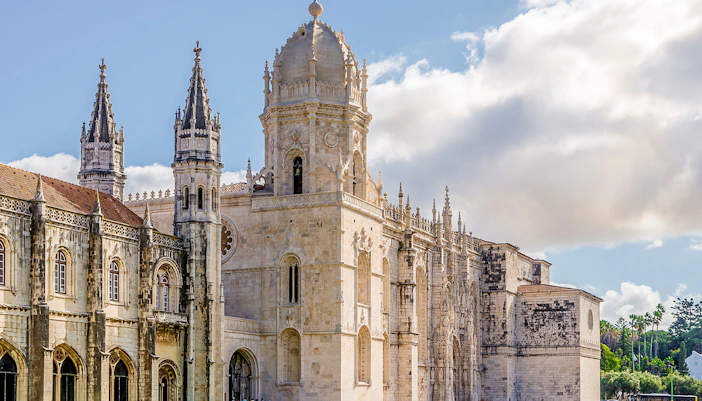
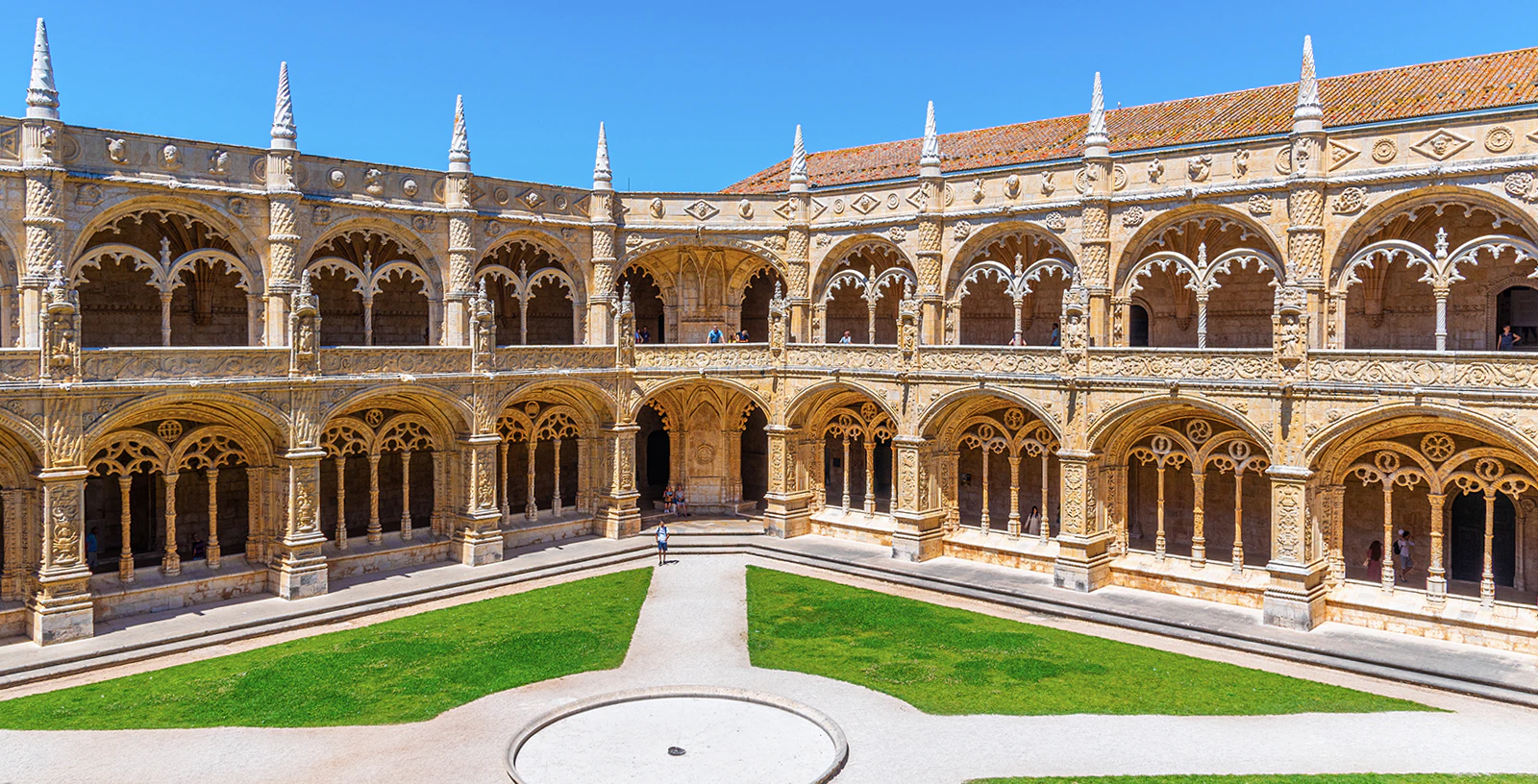
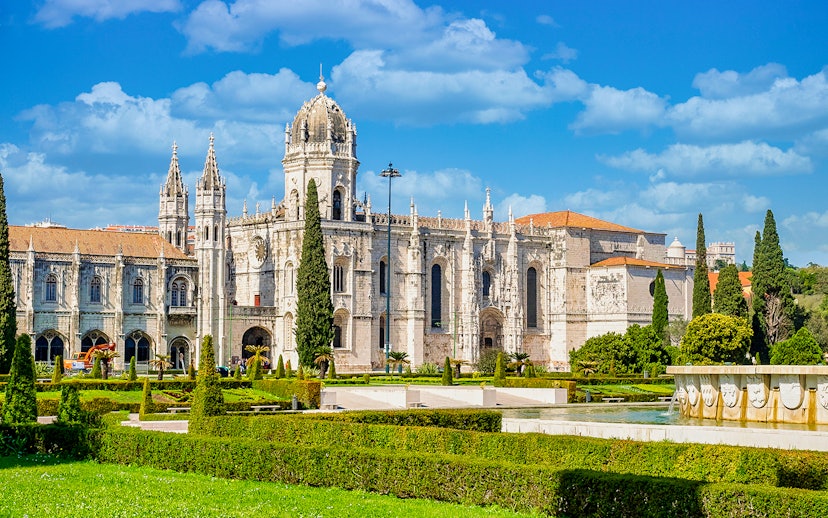
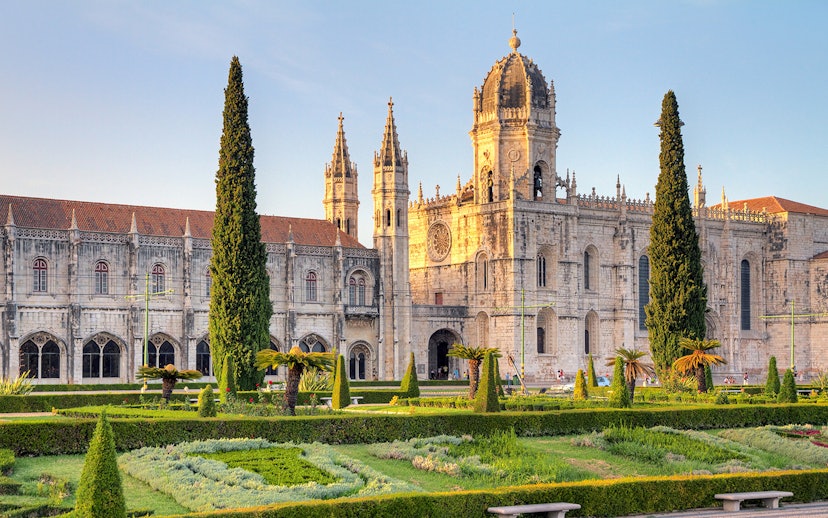
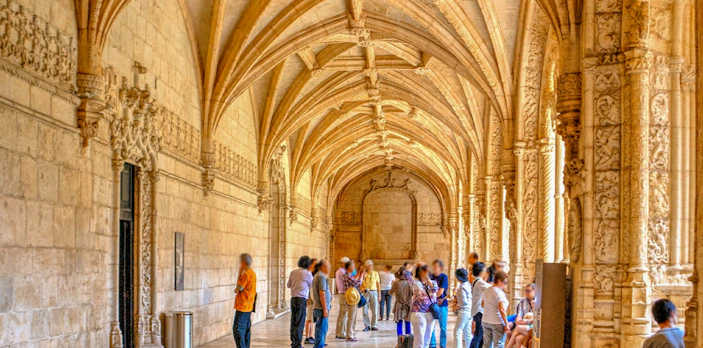
The cloister is the point where Jerónimos Monastery stops feeling like a grand façade and becomes a complete architectural experience. Most visitors notice the open courtyard first, but the real detail sits at eye level and above it — carved ropes, armillary spheres, foliage, and saints threaded through nearly every arch. Use the highlights below to slow the space down and see why one full circuit is worth prioritizing.

Ground-floor arcades

Begin on the lower walkways and stand close to the pillars rather than in the center lawn view. The carved bands around the columns hold ropes, shields, spheres, and dense plant forms that tie the monastery visually to Portugal’s maritime age.

Upper gallery views

Climb to the upper level and pause midway along one side of the square. From here, you can read the cloister as a whole — repeating arches, open sky, green courtyard, and the church mass beside you. This is the clearest symmetry view.

Doorways off the cloister

Look carefully at the framed openings leading from the cloister into adjoining monastic rooms. These thresholds show that the cloister was not decorative filler, but the circulation core that connected prayer, meals, study, and daily movement.

Historical & cultural significance

Built from 1501 under Manuel I, the cloister turned a working monastery into a stone record of Portugal’s imperial confidence. Its ropes, shells, armillary spheres, and royal emblems translated the Age of Discovery into architecture beside the Tagus. Today, it functions as the visual core of a UNESCO World Heritage monument, shaping how visitors understand the monastery beyond the church and tombs.
👉 Explore the full history of Jerónimos Monastery

Notable figures

Manuel I | Patron

Commissioned the monastery in 1501, linking Belém’s waterfront to Portugal’s expanding maritime empire.
View Wikipedia

Diogo de Boitaca | Architect

Designed the early monastery and established the cloister’s late Gothic-Manueline framework.
View Wikipedia

João de Castilho | Architect

Refined the cloister with denser ornament and much of its finished stone carving.
View Wikipedia

Vasco da Gama | Historical figure

Buried nearby in the church, he gives the cloister its strongest connection to Portugal’s oceanic memory.
View Wikipedia

Know before you go

  • Open: Tuesday to Sunday, 10am–5:30pm
  • Last entry: 5pm
  • Closed: Mondays, January 1, Easter Sunday, May 1, and December 25
  • Special hours: October 24 and December 5, closed 9:30am–1pm

Address: Praça do Império, 1400-206 Lisbon

  • Nearest tram and bus: Tram 15E and buses 714/727 stop in Belém, a short walk from the entrance
  • Nearest rail: Belém station on the Cascais line is about 15–20 minutes away on foot
  • Entry point: Use the monastery’s paid entrance for the cloister; the church has a separate free-entry line
  • Time to reach it: Usually 5–10 minutes after ticket check and security, depending on the queue
  • Wheelchair access: Partial; the lower cloister level is accessible
  • Surface: Some sections are cobblestoned and can be tricky to navigate
  • Mobility note: Current visitor information describes overall access as medium for guests with reduced mobility
  • Wheelchairs: Available for rent at the entrance
  • Route planning: Ask staff on arrival for the easiest lower-level route and current access conditions beyond it
  • Coverage: Modest clothing is expected across the monastery complex
  • Not recommended: Off-shoulder tops, short dresses, and knee-high shorts
  • Context: The monastery remains a religious setting, so dress expectations are taken more seriously than at a standard museum
  • Practical fix: Bring a light layer if you’re visiting in warm weather
  • Church line: Dress checks may be stricter at the separate church entrance
  • Photography: Allowed in many open areas, but some monastery sections restrict photos
  • Flash: Not allowed inside the church
  • Bags: Large bags, luggage, and backpacks are not allowed inside
  • Food and drink: Not allowed inside the monastery
  • Conduct: Keep noise low and respect the religious setting throughout your visit

Frequently asked questions about the cloisters

Yes. Entry to the cloister is included with every valid Jerónimos Monastery ticket. No separate cloister ticket exists.

More reads